
Last updated: October 27, 2026
Key Takeaways
- The child tax credit is a federal tax credit for a qualifying child under IRS rules.
- A child counts only when the IRS qualifying-child tests are met.
- The credit is claimed on a federal return after dependent status is confirmed.
- Income can reduce the credit even when the child qualifies.
The child tax credit: who qualifies and how it works is a federal tax question, and the first check is whether the child and the return meet the IRS tests. If the child does not meet the age, relationship, residency, support, and filing rules, the credit may not appear on the return at all.
Quick Answer: the child tax credit can be reduced to $0 if the child fails any qualifying-child test, and income can phase it out. This is information, not financial advice. Tax rules change, and the IRS can update forms, worksheets, and thresholds. For your own return, a qualified tax adviser or preparer can help if your situation is mixed or unusual. See IRS Publication 501 and the Form 1040 instructions for the current rules.
Who this applies to, and what you need before you start

The child tax credit applies to a taxpayer who is claiming a dependent on a federal tax return and who wants to know whether that dependent also counts as a qualifying child for credit purposes. It is for the person who files the return, not for the child, and it generally depends on the IRS rules for residency, age, relationship, and support. One useful starting point is the IRS topic page on credits for families, which explains the federal framework in plain language. See also IRS Publication 501 and the Form 1040 instructions.
Before trying to claim the child tax credit, a reader should already know four basics: the child’s full legal name, date of birth, Social Security number or other tax identification status the IRS accepts, and where the child lived during the year. If those facts are not clear, the rest of the analysis gets messy fast. A missing Social Security number, for example, can block the child tax credit even when every other test is satisfied.
This guide assumes the reader is trying to answer one question: “Does this child count, and if so, how does the credit show up on the tax return?” It does not cover earned income credit, dependent care credit, or education credits. Those are separate rules, and mixing them together causes bad filings.
What the child tax credit actually is
The child tax credit is a federal tax credit tied to a dependent child who meets the IRS qualifying-child tests. A tax credit lowers tax owed directly, which is different from a deduction, which lowers taxable income. That distinction matters because a household can have a child and still miss the child tax credit if the child is not a qualifying child under the tax rules.
The credit also has refundability rules. In simple terms, part of the credit may be refundable on some returns, which means it can reduce tax below zero and create a refund, but only if the law and the return’s facts allow it. Refundability is not automatic, and it is not the same thing as getting back every dollar of the credit. The amount that can be refunded depends on the current year’s IRS rules, the tax return, and the taxpayer’s income and filing status.
A generic article often gets this wrong by treating “child tax credit” as if it were a single flat benefit. It is not. The credit is tied to the dependent rules first, then to age and residency, then to income phaseouts, and then to the refund portion, if any. If any one of those layers fails, the child tax credit can shrink or disappear.
One quick way to think about it is this: the child tax credit is part identity test, part household test, part tax-return test. The IRS asks whether the child is the right kind of dependent, whether the child lived where the rules require, and whether the taxpayer’s return falls within the income limits. If the answer to any of those is no, the credit can be reduced or denied.
Does this child count as a qualifying child?

A child counts for the child tax credit only if the IRS qualifying child tests are met. Those tests are the gatekeeper. A dependent can qualify for one rule and still fail another, so the word “dependent” alone is not enough.
Here is the practical sequence to check:
- Confirm the relationship test. Check whether the child is your son, daughter, stepchild, foster child placed by an authorized agency, sibling, half sibling, step-sibling, or a descendant of one of those, such as a grandchild, niece, or nephew. What to verify: the family link and whether the child was legally placed if foster care is involved. Problem sign: the child is a roommate’s child, a friend’s child, or another relative outside the qualifying list.
- Check the age test. The child generally must be under the age limit set by the current tax year rules, which commonly turns on whether the child was under 17 at the end of the year. What to verify: date of birth against the tax year. Problem sign: the child reached the age cutoff before year-end, even by one day.
- Check the residency test. The child must have lived with you for more than half of the tax year. What to verify: months, not vague custody assumptions. Problem sign: the child stayed elsewhere for a longer stretch, such as with another parent, relative, school program, or temporary arrangement that pushes your total below the halfway mark.
- Check the support test. The child must not have provided more than half of their own support for the year. What to verify: housing, food, clothing, medical costs, and education support provided by the household. Problem sign: the child paid most of their own living costs from work, savings, or benefits.
- Check the filing test. The child cannot file a joint return with a spouse unless an exception applies. What to verify: the child’s own tax filing status, if any. Problem sign: a joint return was filed without a valid exception.
- Check the citizenship or residency status requirement. The IRS rules require a child who meets the tax credit conditions to have the required tax status, which is not the same as ordinary household residency. What to verify: the child’s tax identity documents and legal status as the IRS requires. Problem sign: there is no acceptable tax identification number for the return.
- Check the dependency claim. You must actually be eligible to claim the child as a dependent on the tax return. What to verify: no other taxpayer is entitled to claim the same child under the tie-breaker rules. Problem sign: another parent or relative has a stronger claim under the IRS rules.
The most common mistake is stopping after the relationship test. Being a parent does not end the analysis. A child can be your child and still fail the age or residency rules. The IRS looks at the whole package, not just the family tree.
For the official framework, the IRS instructions for Form 1040 and the qualifying child rules in Publication 501 are the right reference points. They are dry, but they are the standard that controls the return.
How the credit is claimed on a tax return
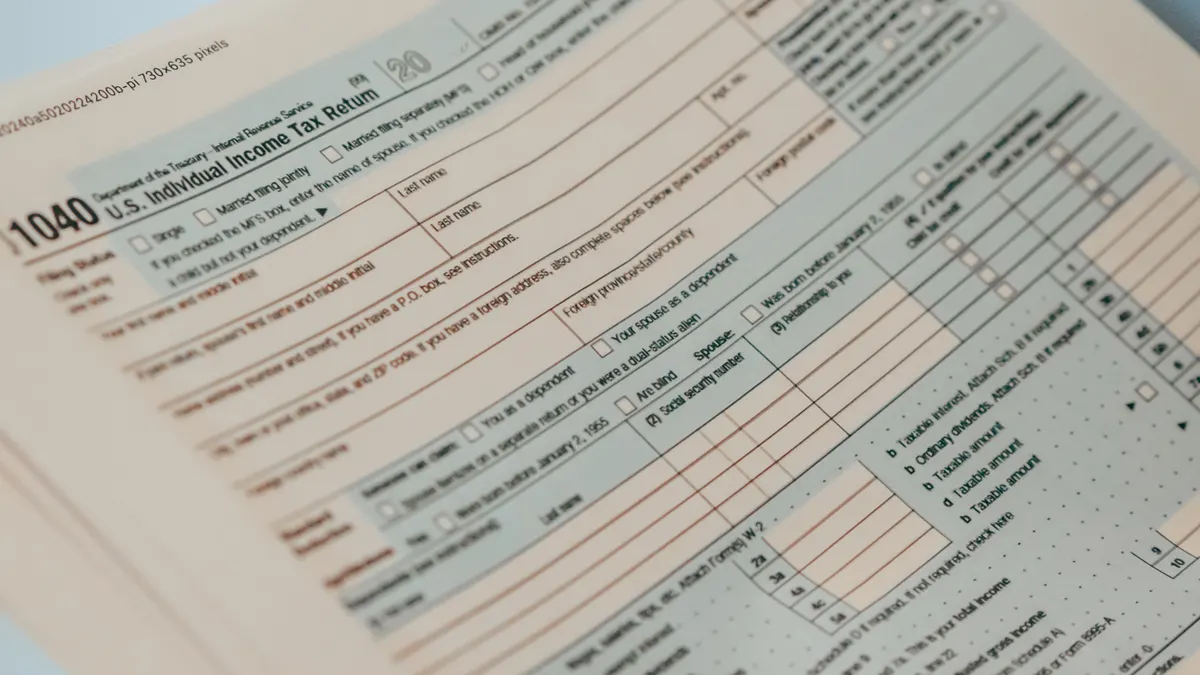
The child tax credit is claimed on the federal tax return after the dependent and qualifying-child tests are complete. In practice, that means the return is built in stages: first the child is identified, then the dependency claim is checked, then the child tax credit is calculated under the current year’s worksheet or schedule.
The filing process usually follows this order:
- Enter the child’s identity exactly as it appears on official records. Use the full legal name and correct tax identification number. What to verify: the name and number match the Social Security Administration or other accepted record. Problem sign: a typo, nickname, or missing digit.
- Confirm the child qualifies as your dependent. The dependent category matters because the child tax credit depends on that status. What to verify: the child is not already claimed by someone else and meets the IRS tests. Problem sign: another return also claims the same dependent.
- Apply the qualifying child tests. Work through age, residency, support, and filing status. What to verify: each test is satisfied for the tax year. Problem sign: one test fails, even if the others pass.
- Review the current-year income phaseout rule. Some taxpayers lose part or all of the credit once income rises above the IRS threshold for that year. What to verify: adjusted gross income on the return and the phaseout rule in force for that tax year. Problem sign: the return’s income is high enough to reduce the credit.
- Check whether the credit is partially refundable. Refundability depends on the law for that year and the facts on the return. What to verify: the refundable portion, if any, is allowed under the current rules. Problem sign: the expectation is a cash refund for the full credit when the rules do not allow that.
- Run the tax software worksheet or IRS worksheet. The calculation can depend on other entries and current limits. What to verify: the worksheet completes without an error or override. Problem sign: the software blocks the credit or shows a lower amount.
- Keep the documentation with the tax records. Residency records, school records, medical bills, custody orders, and proof of support can matter if the IRS asks questions later. What to verify: the records cover the tax year and support the claim. Problem sign: you cannot explain why the child qualifies if the return is examined.
A good result is not “the biggest refund.” A good result is a return that matches the rules and can be defended. That matters because child-related credits are a common audit and correspondence issue when two people think they have the same claim.
One trade-off is that a cleaner, conservative filing may produce less tax benefit than a hopeful one, but it is less likely to be rejected, delayed, or corrected later. That is a real cost-benefit choice, not a moral one.
How income affects the child tax credit
Income can reduce the child tax credit even when the child qualifies. That is the part many people miss, because the child may meet every family test and still produce a smaller credit once the return crosses the phaseout range for that year.
The IRS applies income thresholds by tax year, and those limits can change. That means there is no universal number to memorize for all years and all filers. The right way to think about it is simple: the credit may begin to phase out once adjusted gross income rises above the amount set for that year, and the reduction continues according to the IRS formula.
This is where online advice becomes risky. A blanket statement such as “you qualify because you have a child under 17” skips the income rule entirely. That error can lead people to expect a credit that the return will not actually allow.
The other point to watch is that refundability and phaseout are separate tests. A family can be below the age and residency thresholds but still see the credit reduced because of income. Another family can be below the phaseout level but still fail the child tax credit because the child is too old or did not live with the taxpayer long enough.
A helpful way to read the IRS guidance is to treat the income rule as a filter after the dependency rule, and if the return is complex, a tax professional can help check the calculation before filing. First ask whether the child qualifies; then ask how much of the credit survives the phaseout calculation. See IRS Publication 501 and the Form 1040 instructions for the current limits and worksheet rules.
When the standard rules do not apply
The standard child tax credit rule is not the right tool when custody, residency, immigration status, or multiple claimants make the claim unclear. In those cases, the issue is not just “Do I have a child?” It is “Which taxpayer, if any, gets to claim this child under the IRS tie-breaker rules?”
Shared custody with no clear majority residence: This can break the more-than-half-year residency test — use calendar records, school records, or a custody order to determine where the child actually lived. If the child did not live with you for the required period, the child tax credit can fail even if you provided more money.
Two taxpayers both plan to claim the same child: This can trigger the IRS tie-breaker rules — only one person can usually claim the child. If the issue is not resolved before filing, one return may be rejected or amended later.
The child moved during the year: Midyear moves can make the residency test hard to satisfy — count actual nights or months, not intentions. If the total falls below the required period, the child tax credit may not be available.
The child is close to the age cutoff: Age is measured against the tax-year rule, not a parent’s guess — verify the birthday against the filing year. If the child is over the limit, the child tax credit may not apply even by one day.
The child paid most of their own support: A working adult child can fail the support test — compare the child’s own spending with the household’s support. If the child supported themselves, the return may not qualify for the child tax credit.
These are the cases where generic “yes/no” articles do the most damage. The right answer depends on the facts, and sometimes the facts point to a different dependent claim or no claim at all.
The mistakes people actually make with this credit
The child tax credit is usually lost through four or five avoidable errors, not because the taxpayer lacks a child but because the return misses one requirement.
They confuse a dependent with a qualifying child. The consequence is a claim that looks right on paper but fails the credit test. The fix is to work through the IRS qualifying child rules, not just the general dependent rule.
They assume age alone controls the credit. The consequence is a false expectation that any minor qualifies. The fix is to check age, residency, support, and filing status together.
They ignore the residency test after a custody change. The consequence is a denied credit or a later IRS dispute. The fix is to count where the child actually lived for more than half the year and keep records.
They overlook the income phaseout. The consequence is budgeting around a credit that is reduced or removed on the return. The fix is to review the current tax-year limits before filing.
They use the wrong tax identification number or name. The consequence is a processing delay or rejection. The fix is to match the return to official records before submission.
The cleanest way to avoid trouble is to treat the child tax credit as a checklist, not a guess. If any step is uncertain, the safest move is to verify the facts before filing.
Drafted with AI; not yet reviewed by a person.