

Last updated: October 28, 2026
Key Takeaways
- Federal income tax brackets use rates on slices of taxable income, not on all income at once.
- Federal income tax is calculated by stacking taxable income through the Form 1040 bracket bands after deductions.
- Filing status can change the bracket ranges enough to affect where income lands.
- The 2026 bracket ranges are IRS dollar bands tied to taxable income and filing status.
The 2026 federal income tax brackets are the IRS rate bands that decide how much of your taxable income gets taxed at each rate; they are not a single rate slapped onto all of your income. A U.S. taxpayer looking at this system needs to know three things: how the brackets work, how filing status changes the ranges, and why the rate in a table is often not the rate you actually pay. This is information, not financial advice. For your own situation, a qualified tax adviser should be consulted.
What federal income tax brackets are, and what they are not

Federal income tax brackets are a tiered system that applies different tax rates to slices of taxable income, not to your entire paycheck. In plain language, the IRS sets ranges, and each range is taxed at its own marginal tax rate—the rate on the next dollar that falls into that range. The bracket system is built around filing status, so a single filer, a married filing jointly return, and a head of household return can all have different bracket ranges for the same tax year.
That distinction matters because plenty of people mix up the bracket rate with the effective tax rate. One is the rate attached to a range. The other is the overall percentage you pay after all the bracketed pieces are added together. Those numbers are not the same, and usually they are miles apart.
For 2026, the IRS still controls the federal income tax brackets, and the exact ranges can shift with inflation adjustments, legislative changes, or both. The IRS release for that tax year is the primary source for the final figures. Planning before year-end? Use the bracket structure as a working model, and consult a qualified tax professional if your situation is complex. The IRS page that publishes annual inflation adjustments is the place to verify the final ranges once they are released: https://www.irs.gov/newsroom/irs-releases-tax-inflation-adjustments-for-tax-year-2026
The standard deduction also sits inside this system because it reduces the income that can be taxed at all. For many taxpayers, the first dollars of income are sheltered by the standard deduction before any bracket rate applies. So two people with the same gross income can land in very different places after deductions.
How the bracket system works on a 1040
Federal income tax is calculated by stacking income through the brackets on Form 1040, usually after the standard deduction or itemized deductions reduce your gross income to taxable income. Start with taxable income, then apply each bracket rate only to the portion inside that band. Cross into a higher bracket? Only the amount above the cutoff gets the higher rate.
Picture a ladder with rungs spaced by dollar thresholds. Your income climbs until it hits the next rung, and only the part above that rung moves into the next rate band. The IRS does not suddenly reprice all your income when you cross a threshold by $1. That “cliff” fear is one of the most common misunderstandings in tax planning.
Here is the practical sequence:
-
Find your filing status.
Use the status that matches your return: single, married filing jointly, married filing separately, head of household, or qualifying widow(er). Verify that your status is correct before you look at any bracket ranges. A wrong status sends you to the wrong table. -
Calculate gross income.
Add the income items that belong on the return, such as wages, interest, and other taxable sources. Verify that you are using a tax-year total, not a monthly or year-to-date estimate. A mismatch here makes every later step wrong. -
Subtract above-the-line deductions and then the standard deduction or itemized deductions.
The standard deduction is a fixed reduction that depends on filing status and tax year. Verify that you are using the 2026 amount, not the 2025 amount. Use the wrong year, and taxable income will be overstated or understated. -
Arrive at taxable income.
This is the amount the brackets apply to. Verify that the number is not negative. If taxable income is below zero on your rough math, the return likely needs a second look for missing adjustments or an overestimate of deductions. -
Match taxable income to the IRS bracket table for your filing status.
Each bracket has a lower and upper bound, except the top bracket, which has no practical upper ceiling for that status. Verify that you are reading the correct status column. Mixing up single and married filing jointly is a frequent error. -
Apply each rate only to the slice in that range.
The first dollars are taxed at the lowest applicable rate, then the next slice at the next rate, and so on. Verify that you are not taxing the whole income at the highest rate you reached. If a worksheet does that, it is wrong. -
Compute your total tax and then your effective rate if needed.
Divide total federal income tax by taxable income to get the effective rate. Verify that this is just a summary number, not a bracket rate. If you use the effective rate as if it were a bracket rate, you will misread your own return. -
Check whether credits change the final amount owed.
Credits do not change your bracket, but they can lower the tax bill after the bracket math is done. Verify that you are not confusing credits with deductions. A credit and a deduction cut tax in different ways.
The result should be a worksheet that shows how much income is taxed at each rate. That is the cleanest way to understand why a taxpayer can move into a higher bracket without losing money on every dollar already earned. The system is a staircase, not a trapdoor.
What changes from single to married filing jointly to head of household?
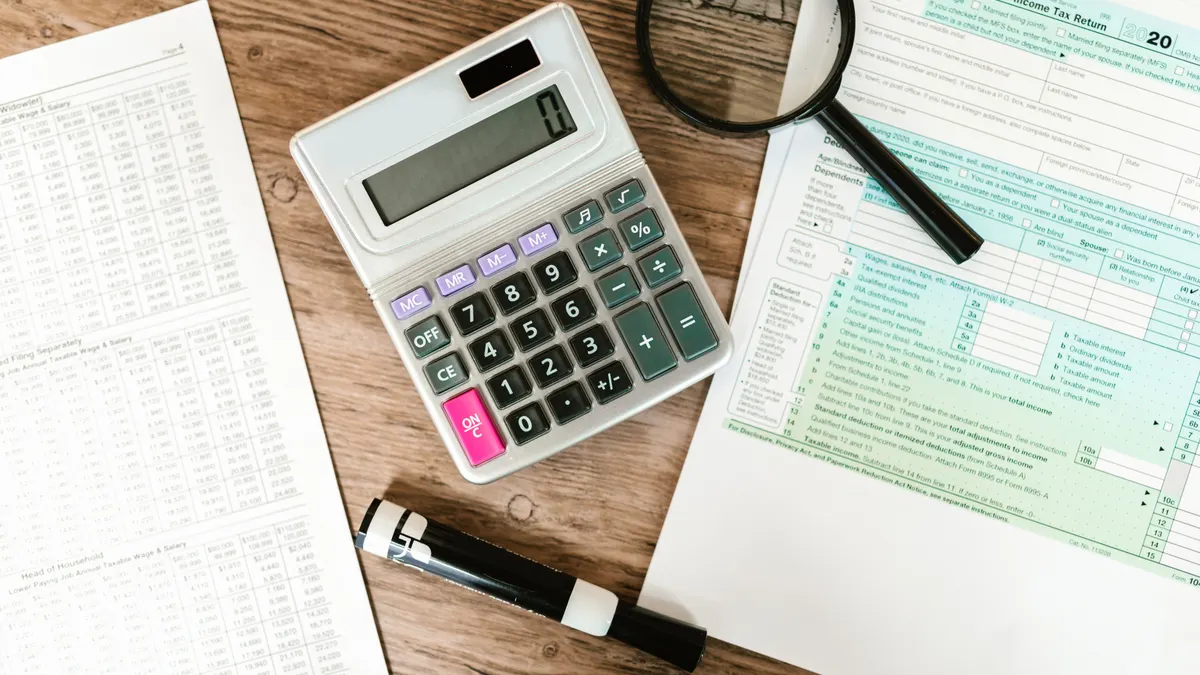
Filing status changes the bracket ranges, and that can be the difference between sitting comfortably in one bracket and nudging into the next. A single filer generally has the narrowest bracket ranges. A married filing jointly return usually has wider ranges because the tax law recognizes the combined return of two spouses. Head of household sits between those two in many cases, but only taxpayers who qualify for that status can use it.
This is one of the places where a generic article often gets lazy. It says, “The brackets are the same for everyone,” and that is false. The rate structure is shared, but the dollar thresholds are not. The filing status column is part of the rule, not a footnote.
The effect is easiest to see when two taxpayers have the same taxable income but different filing statuses. One may stay in a lower bracket range while the other crosses into a higher one because the thresholds are different. The married filing jointly table often has broader thresholds, but that does not mean the return always ends up with lower tax. Total income, deductions, and credits still matter.
The standard deduction also moves with filing status. That matters because the bracket calculation starts after the deduction is taken off. A larger standard deduction can keep more income out of the taxed ranges before the bracket math even starts. For 2026, verify the status-specific standard deduction on the IRS’s annual inflation-adjustment release rather than relying on last year’s amount.
One more point gets missed: filing status affects the bracket table, but it does not change what counts as taxable income. The income categories are still the same; only the threshold structure changes. So a return can be perfectly accurate and still produce a different tax outcome from someone else’s return with the same pay level.
Trying to compare your situation to someone else’s? Compare filing status first. Without that, the comparison can be misleading.
The 2026 tax bracket ranges: how to read them without guessing
The 2026 tax bracket ranges are the dollar bands in the IRS table, and you should read them as status-specific thresholds tied to taxable income. Because exact bracket figures can change with inflation indexing and tax-law updates, the safest way to use the 2026 table is to read the IRS’s published ranges for that year and then map your taxable income to the correct column.
When you look at the table, do three things at once:
- confirm the tax year is 2026;
- confirm the filing status column matches your return;
- confirm the range is based on taxable income, not gross income.
That last point is where people make the most expensive mistake. Gross income is the starting number before deductions. Taxable income is the number after deductions. Brackets apply to the second one, not the first.
For a quick check, use the IRS publication or tax instructions that show the annual rate schedule and bracket thresholds. The IRS is the governing source for the federal income tax brackets, not a bank, payroll app, or social media chart. If those sources disagree, trust the IRS release and the instructions for the year in question. See the IRS inflation-adjustment release above and the IRS Form 1040 instructions: https://www.irs.gov/forms-pubs/about-form-1040
Honestly, this is where people get tripped up: if your income includes items that do not fit cleanly into ordinary wage income, your final return may not be as simple as “find the bracket and multiply.” Deductions, credits, and other tax rules can change the final tax bill without changing the bracket itself. This guide explains the bracket system, not every special rule layered onto it.
Think in bands, not in a single rate. Once you do that, the bracket table stops looking like a snare and starts looking like a map.
What mistakes people actually make with brackets
People make the same bracket mistakes over and over, and each one has a clear cost.
-
Using gross income instead of taxable income.
This usually overstates the bracket you think you are in and can make you panic about a higher tax bill. The correct alternative is to subtract the standard deduction or itemized deductions first, then check the bracket. -
Applying one rate to all income once they cross a threshold.
This can inflate the expected tax bill by a lot on paper. The correct alternative is to tax each slice separately, because only the income inside a band gets that band’s rate. -
Reading the wrong filing-status column.
This misstates the threshold and can lead to bad estimates, especially for married taxpayers or households with dependents. The correct alternative is to start with filing status, then use the matching IRS column. -
Using the wrong tax year’s table.
Bracket thresholds change over time, often annually. The consequence is a return estimate that looks precise but is built on last year’s numbers. The correct alternative is to match the bracket table to the 2026 tax year, not a generic current table. -
Confusing the bracket rate with the effective tax rate.
This creates a false picture of how much tax the return really carries. The correct alternative is to compute effective tax rate only after the whole bracket calculation is complete. -
Forgetting that deductions and credits are different.
Deductions reduce taxable income; credits reduce tax after the calculation. Mixing them up can distort planning. The correct alternative is to treat deductions as bracket-shaping tools and credits as final-tax reducers.
These mistakes matter because they feed bad estimates into withholding decisions, retirement planning, and year-end tax planning. The bracket system is simple only after you sort the definitions correctly. Before that, it is easy to be confidently wrong.
When the standard bracket table does not tell the whole story
The standard bracket table is the right starting point, but it needs modification when your return has more than basic wage income, unusual deductions, or a filing status question. If you have self-employment income, large itemized deductions, or dependents that affect head of household status, the bracket answer can still be correct and still be incomplete.
Use a different lens when any of these apply:
-
Your filing status is uncertain.
If you are not sure whether you qualify as head of household, the bracket table is premature. The wrong status changes the thresholds and can distort every estimate. -
You expect a large standard deduction versus itemizing decision.
The amount you can deduct affects how much income reaches the brackets. A small change in deductions can move taxable income across a threshold. -
You have income that is not ordinary wage income.
The bracket math may still apply to part of your return, but other tax rules can change the final outcome. That means the bracket table alone is not enough to answer the question. -
You are comparing 2025 and 2026 tax outcomes.
Inflation adjustments can shift thresholds year to year. The comparison only works if both years are matched correctly. -
You need a legal or filing answer, not just a math explanation.
If the question is whether a return is correctly filed, the bracket table cannot settle it by itself. That is where a qualified tax professional earns their fee.
The general rule is simple: the bracket system tells you how taxable income is taxed, but it does not replace the rest of the return. That is why a clean bracket explanation helps, yet never fully stands alone.
What a good bracket check looks like before you file
A good bracket check gives you a defensible estimate, not a perfect prediction. If you can point to your filing status, your taxable income, the matching 2026 IRS bracket table, and the standard deduction used in the calculation, you have enough to understand the rate structure. If any one of those pieces is missing, the estimate is shaky.
A strong check usually includes four things:
- the correct filing status;
- taxable income, not gross income;
- the right 2026 IRS threshold table;
- a clear separation between bracket rate and effective rate.
That is enough to answer the basic question: “What bracket am I in?” It is also enough to catch the classic errors before they become filing mistakes. What it does not do is answer every tax question. It does not decide whether credits apply, whether itemizing is better than the standard deduction, or whether a special circumstance changes the return.
If you want the most practical takeaway, it is this: brackets are bands, not punishments. The IRS uses them to tax slices of taxable income, and the filing status column decides which set of slices you get. Once you understand that, the rest of the return becomes much easier to read.
How do federal tax brackets work?
Federal tax brackets work by applying different rates to different slices of taxable income, based on filing status and the IRS schedule for the tax year.
Drafted with AI; not yet reviewed by a person.