

Last updated: October 28, 2026
Key Takeaways
- If you expect enough federal tax owed and not enough withholding, you usually need estimated payments.
- Estimated payments are money you send yourself; withholding is taken from pay before you receive it.
- The IRS spreads estimated taxes across four payment periods during the year.
- The safe harbor rule may avoid a penalty if you pay enough during the year, even if your final bill changes.
Estimated tax payments for self-employed filers are the quarterly IRS payments some people make when tax is not being withheld from their income. For someone with self-employment income, that usually means paying the IRS directly rather than waiting for a paycheck system to do it. This guide lays out who usually owes estimated taxes for self-employed filers, how the IRS treats self-employment income on Schedule C, and where Form 1040-ES fits in; see IRS guidance on estimated taxes and Form 1040-ES, and consult a qualified tax adviser for your own situation. Information only, not financial advice. The IRS says to use the instructions for your own tax picture.
Who has to make estimated tax payments?
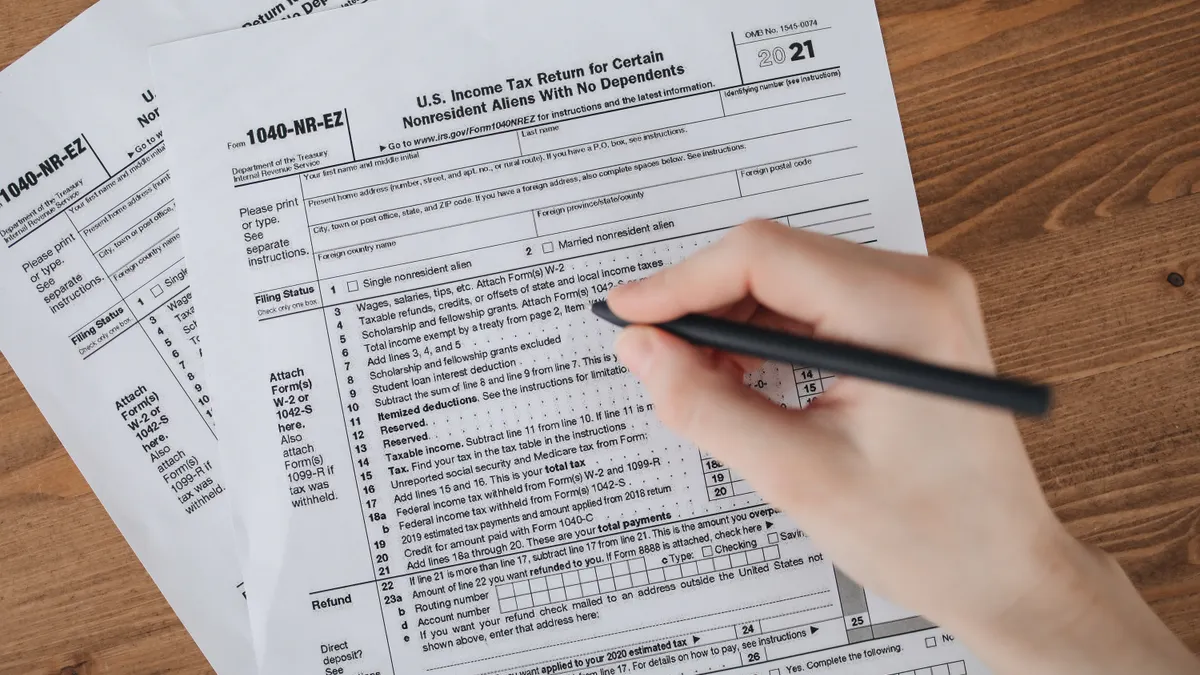
Usually, you have to make estimated tax payments if you expect to owe enough federal tax for the year and not enough tax will be withheld from your income. For many self-employed filers, that means freelance income, contract work, side-business income, or other self-employment income reported on Schedule C.
The real question is not “Do I run a business?” but “Will withholding cover my federal income tax and self-employment tax by filing time?” No, if the answer is no, estimated taxes are the standard way to prepay during the year instead of facing one large April bill. The IRS uses the phrase “pay-as-you-go,” and estimated payments are one way to do that.
This matters most for people without regular W-2 withholding. Employees often sidestep quarterly payments because tax is already pulled from their paychecks. A self-employed filer usually has to create that withholding effect manually.
Not every person with side income automatically owes quarterly payments. Small amounts of income, a year with enough withholding from another job, or a prior-year refund can change the answer. The IRS instructions for Form 1040-ES explain the general rules, but your own tax picture for the year is what decides it.
For a broader filing overview, see the hub on federal tax brackets and filing basics.
How do estimated taxes differ from withholding?
Estimated tax payments are money you send to the IRS yourself, while withholding is tax taken out before you receive your pay. That is the simplest split.
Withholding usually comes from wages, pensions, or other payment streams where the payer remits tax on your behalf. Estimated payments come from you, usually on Form 1040-ES, when no payer is doing that job. Both count toward your federal tax bill. Both can reduce or wipe out a balance due at filing time. The difference is timing and source.
This distinction matters because self-employed filers often assume “I paid tax already” when they have not actually prepaid enough. If you receive 1099 income but never send estimated payments, the IRS may see an underpayment even if your business was not profitable in the way you expected. The federal return still looks at the year as a whole.
Think of it this way: withholding is automatic; estimated tax payments are manual. Withholding can also be adjusted by submitting a new Form W-4 to an employer. That does not change your business income, but it can help cover tax from Schedule C earnings without separate quarterly payments if you also have a W-2 job.
This is where many people stumble. They focus on income, not on payment method. The IRS cares about both how much tax is due and how much has already been paid in during the year. If the paid-in total is too low, estimated taxes exist to close that gap before the return is filed.
How do estimated tax payments work during the year?

Estimated tax payments work by dividing your expected federal tax into 4 payment periods and sending in amounts during the year instead of all at once. The IRS expects these payments roughly quarterly, though the due dates are not equal 3-month intervals.
Use this as the working procedure for a self-employed filer with Schedule C income:
- Estimate your annual net self-employment income: Start with your business receipts and subtract ordinary business expenses on Schedule C for the year. Use a 12-month estimate, not a month-to-month guess. The number should reflect taxable business profit, not gross deposits. Problem sign: you are using sales volume or bank deposits without accounting for expenses.
- Separate income that already has withholding: List wages, pensions, and any other income with tax withheld alongside your self-employment income. You need to know which dollar amounts already have federal tax paid in. Problem sign: you treat all income the same and ignore withholding credits; see IRS withholding guidance.
- Check whether the safe harbor rule fits you: The safe harbor rule is the IRS method that can keep a penalty from applying if you prepaid enough under the rule’s thresholds. You need to know whether your prior-year return and current-year projections point to enough payment. Problem sign: you guess based on last year’s refund without checking the actual rule.
- Use Form 1040-ES to estimate the payment: The worksheet on Form 1040-ES helps estimate federal income tax and self-employment tax for the year. You are using the federal form for the current tax year. Problem sign: you rely on a stale worksheet or random online calculator with no year context.
- Divide the total into the required installments: Split the amount across the 4 due dates for the year unless your income is uneven and a different annualized approach applies. The payment schedule must match the IRS timetable. Problem sign: you send one lump sum whenever cash is available and assume that counts as on-time.
- Pay by the deadline, not a few days later: Submit each installment by the due date listed by the IRS, which may shift if a date falls on a weekend or holiday. The payment needs to post for the correct quarter. Problem sign: you mail or schedule a transfer after the deadline and think the mailing date alone solves it.
- Keep proof of each payment: Save the IRS confirmation, canceled check, or payment record with the quarter and tax year attached. The payment must be traceable to the correct year. Problem sign: you cannot match a payment to the return when you file.
- Recheck after your income changes: If business income rises or falls sharply, recalculate rather than waiting until year-end. The new estimate still has to cover current income. Problem sign: you keep paying the same amount after a major change in earnings.
Form 1040-ES is not a filing return. It is the estimate-and-pay tool. People often confuse it with the annual Form 1040, but the IRS uses them for different jobs. The annual return reconciles the year. Estimated payments reduce the balance before that reconciliation happens.
What is the safe harbor rule, and why does it matter?
The safe harbor rule can help you avoid an estimated-tax penalty if you pay enough during the year, even if your final tax bill turns out different. That is why it matters so much for self-employed filers with uneven income.
The rule is a payment standard, not a magic shield. If your payments meet the rule, the IRS generally does not assess an underpayment penalty for that year based on the shortfall. The exact threshold depends on your prior-year tax and your current-year situation, and it can change with tax law. A fixed “pay 25% each quarter” rule can mislead people.
For a freelancer or sole proprietor, the safe harbor rule is often the difference between a predictable cash plan and a surprise penalty. A new consultant who has a strong last year of wages may be able to use prior-year tax as a benchmark. Someone with sharply higher current-year income may need to pay more than the prior year’s amount to stay covered.
The trade-off is that a safe harbor approach can leave you underpaid for the current year if income rises fast. That is not a penalty issue, but it can still produce a large balance due when you file. On the other hand, paying based on the current year’s estimate can reduce the year-end bill, but it is harder to forecast.
Treat the safe harbor rule as a floor to check, not as the whole planning strategy. Form 1040-ES and the IRS instructions explain the mechanics. If you have irregular income, mixed W-2 and 1099 income, or a large change from last year, a tax professional can help you decide whether the safe harbor route is enough for your situation.
What if your income is irregular or your side work is small?
Irregular income changes how estimated taxes should be handled, and small side income sometimes means you do not need quarterly payments at all. The rule still stays the same: compare expected tax to expected withholding.
A seasonal contractor, a creator with sporadic royalty income, or a freelancer who invoices in bursts may have quarters with very different cash flow. In that case, the standard equal-installment approach can feel too blunt. The IRS has methods that can account for uneven income, but they require more recordkeeping and more careful estimates. You need to tie each installment to the income actually earned in that period, not just split the year into four identical pieces.
Small income can work the other way too. Someone with a little Schedule C income and a full-time W-2 job might already have enough withholding to cover the year. In that case, estimated tax payments may be unnecessary. The common mistake is assuming any 1099 income triggers quarterly payments automatically. It does not. The real issue is expected tax after all payments and withholding are counted.
Gross receipts can fool people here. A small side hustle with $3,000 in deposits is not automatically a $3,000 tax problem, because Schedule C looks at net profit after business expenses. But this article is not the place to calculate deductions or self-employment tax itself. Those belong on a different page and, for a borderline case, on a tax preparer’s desk.
If you have a new business, lumpy income, or a major life change, a 15-minute calculation can prevent a 12-month guess.
When should you stop relying on a simple quarter-by-quarter estimate?
Stop using a simple quarter-by-quarter estimate when your tax picture stops being simple. That means the standard approach is the wrong tool, not that you are doing something “wrong.”
You have a large W-2 job plus side income: Your withholding may already cover most or all of the tax — Review your Form W-4 and total withholding before sending separate estimated payments.
Your income changed sharply after the first quarter: The original estimate is stale — Recalculate using the new numbers and adjust later installments instead of repeating the old payment.
You expect a one-time event, not steady earnings: A flat 4-part split may overpay or underpay — Use an annualized approach or get help reconciling the timing.
You owed a penalty last year or received an unexpected bill: The old payment pattern did not match your actual tax — Check the safe harbor rule and compare it with current-year income.
You have several income sources with different withholding rules: The math can get muddy fast — Put all federal tax payments, withholding, and self-employment income on one worksheet before deciding.
You are unsure whether the income belongs on Schedule C at all: Classification errors can distort the estimate — Pause and confirm reporting treatment with a qualified tax adviser before paying based on the wrong bucket.
The consequence of guessing past these situations is usually the same: either too much cash tied up during the year or a balance due that could have been smoothed out. Neither result is ideal, and one can lead to an underpayment penalty if the payment timing misses the IRS rules.
The mistakes people make with estimated taxes
The most common mistakes are not mathematical genius-level errors; they are basic category mistakes that throw off the whole year.
-
Treating all 1099 income as if it needs equal quarterly payments.
Consequence: You may overpay when withholding already covers part of the bill.
Correct alternative: Add your withholding, then decide whether estimated payments are still needed. -
Using gross receipts instead of net self-employment income.
Consequence: The estimate can be far too high and can lock up cash unnecessarily.
Correct alternative: Base the estimate on Schedule C profit, not deposits. -
Missing the due date by a few days.
Consequence: A payment that is late can fail the quarter’s test even if the amount is right.
Correct alternative: Schedule payment before the deadline and keep the confirmation. -
Assuming last year’s refund means this year is covered.
Consequence: A refund from a prior year does not pay the current year’s tax by itself.
Correct alternative: Check current-year withholding and estimated payments separately. -
Ignoring state taxes because the federal estimate is already confusing.
Consequence: A federal payment plan does not cover state obligations.
Correct alternative: Treat state estimated tax as a separate issue and review it separately. -
Never revisiting the estimate after income changes.
Consequence: A strong first quarter can make the rest of the year look deceptively covered, or the reverse.
Correct alternative: Recalculate at least after major income swings or business changes.
Form 1040-ES exists because people need a repeatable process, not a perfect prediction. The goal is not to forecast every dollar. The goal is to keep your federal tax payments aligned closely enough that the return does not become a shock.
What should a first-time self-employed filer do now?
A first-time self-employed filer should first decide whether estimated tax payments are actually needed, then use Form 1040-ES to measure the gap. That is the cleanest starting point.
Begin with three numbers: your expected Schedule C profit, the tax already withheld elsewhere, and your prior-year return if you have one. If you are unsure whether your income belongs on Schedule C, consult a qualified tax adviser before paying on the wrong classification. If those numbers show a gap, estimated taxes for self-employed filers: who has to pay them becomes a practical question, not a mystery.
Drafted with AI; not yet reviewed by a person.